
- All
- Product Name
- Product Keyword
- Product Model
- Product Summary
- Product Description
- Multi Field Search
Views: 0 Author: Site Editor Publish Time: 2026-09-23 Origin: Site


Picture this: your vehicle is hoisted on the lift, the fluid is completely drained, and you are holding a new part that looks absolutely nothing like the factory housing. As a drivetrain technician, I have seen this exact scenario play out too many times in the bay. The gearbox acts as the beating heart of your vehicle's drivetrain, with its filter serving as the ultimate line of defense against microscopic wear. Finding the right replacement shouldn't feel like decoding a cipher, but installing the wrong unit will trigger massive mechanical failure.
Let's cut through the noise. We are going to break down exactly how to verify component compatibility from an engineering perspective. By tapping into a standardized database and understanding your hardware, you guarantee a perfect fit and keep that transmission shifting flawlessly.
Identify Your Specs: Locating your exact transmission model and the 10-digit BOM (Bill of Material) is the non-negotiable first step.
Verify the Blueprint: Using a verified manufacturer chart prevents costly installation mistakes and ensures seamless fluid dynamics.
Hardware Variations: Many modern automatic gearboxes feature an integrated filter permanently built into the polymer oil pan, requiring a full assembly swap rather than a simple cartridge change.
Pressure Matters: Choosing verified components ensures optimal hydraulic pressure and longevity for both daily-driven passenger cars and heavy-duty commercial fleets.
The modern automatic gearbox doesn't just swap gears; it executes hyper-precise shifts using computer-controlled solenoids and complex hydraulic circuits. At the center of this fluid dynamic dance is the filtration unit. Selecting the exact, manufacturer-specified filter is a mechanical necessity for the long-term survival of the valve body.
If we look at recent drivetrain engineering trajectories, there is a massive shift happening across the industry. To hit aggressive global fuel efficiency and emission targets, modern gearboxes run on ultra-low-viscosity fluids at much higher thermal thresholds. What does this mean for the aftermarket? The industry has rapidly moved away from traditional standalone paper media. We are now seeing the widespread adoption of integrated polymer oil pans equipped with multi-layered, synthetic nano-fiber media.
This evolution cuts overall vehicle weight and extends service intervals, but it makes finding the exact transmission filter replacement absolutely critical. The media must trap abrasive clutch material and metallic shavings as small as 20 microns without restricting pump flow. Even a microscopic piece of debris lodged in a delicate mechatronic solenoid can disrupt fluid routing, leading to harsh shifts or a complete loss of motive power.
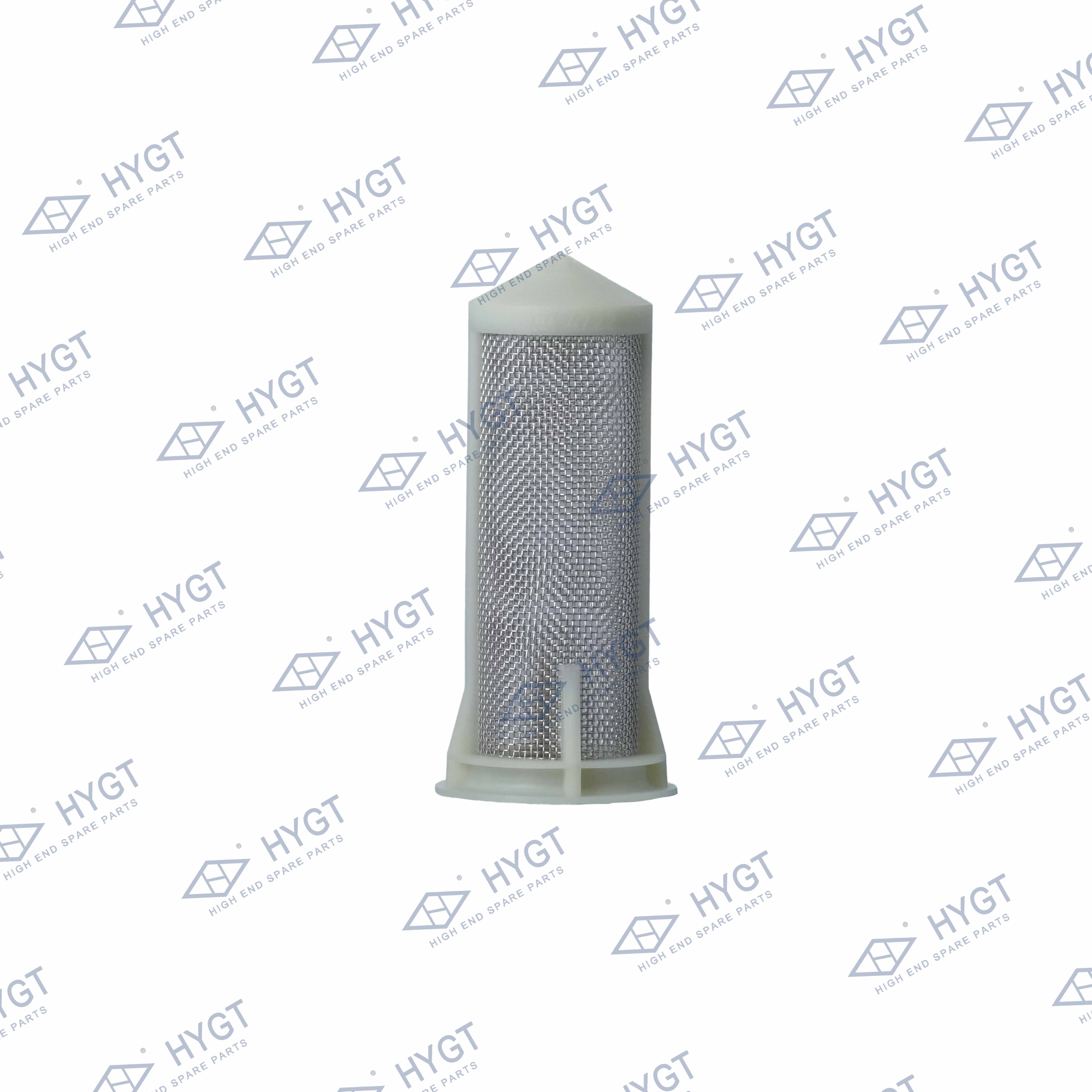
Navigating the replacement parts market requires knowing exactly what you are looking at. Because top-tier manufacturers supply gearboxes to dozens of global vehicle brands—including BMW, Audi, Land Rover, and Ram—the exact same core unit gets slapped with wildly different part numbers depending on the chassis it sits in.
An OEM cross reference acts as a technical Rosetta Stone. It correlates the automaker's internal part number with the actual component creator's ID. For example, a local dealership might list a filter under a specific 11-digit code. However, the engineering firm that actually built the transmission uses a completely different sequence. Relying on visual guesswork here is a recipe for disaster.
Component Type | Typical Identification Method | Engineering Considerations |
|---|---|---|
Standalone Cartridge | Part number stamped directly on the plastic neck or metal housing. | Requires verifying the exact suction neck length and O-ring diameter to prevent aeration. |
Integrated Polymer Pan | 10-digit BOM code stamped on the external pan ribbing. | Must match pan depth exactly; shallow vs. deep pans dictate total fluid capacity. |
Heavy-Duty Commercial | Metal data tag riveted to the main aluminum transmission case. | Bypass valve springs are calibrated for thicker gear oils and massive flow rates. |
A successful service depends entirely on the prep work done before you add anything to your cart. Following a systematic verification process completely eliminates the risk of ordering an incompatible part.
Grab a flashlight and a wire brush. Slide under the chassis and locate the small metal identification tag riveted to the side or rear of the aluminum housing. You are looking for the "Stücklistennummer" or Bill of Material (BOM) number. This 10-digit code dictates the exact internal components, pan depth, and specific filtration requirements for that unique build. Once you have this code, input it into a verified supplier’s technical database to map out the exact replacement.
Let's look at a concrete example. Take widely used ZF transmission parts like the 0501318802 filter element. You can't just match the general shape. You need to verify the micron rating, the bypass valve opening pressure, and the exact suction neck length. If your specific vehicle chassis requires a deep pan for higher fluid capacity, installing a shallow-pan filter means the pickup tube will suck air during hard cornering. This creates cavitation, drops line pressure instantly, and burns up clutch packs in a matter of miles.
Passenger cars are one thing, but commercial fleets operate in a different universe of mechanical stress. The filtration requirements reflect this brutal operating environment.
A standard sedan sees relatively predictable loads. In contrast, commercial transmissions must manage massive torque outputs, heavy towing payloads, and continuous round-the-clock operation. Consequently, selecting a truck gearbox filter requires components engineered with significantly larger surface areas. These robust units handle higher flow rates of thicker gear oils without ever restricting line pressure.
Fleet managers must stick to strict severe-duty maintenance intervals. Trucks operating in high-dust environments or steep mountainous terrain will saturate their filters much faster. Using anything less than an OEM-grade replacement jeopardizes the entire transmission and risks thousands of dollars in downtime.
Even with the perfect part sitting on your workbench, the installation phase is full of traps. Being aware of these common mechanics' pitfalls can save you from frustrating post-installation fluid leaks.
A frequent point of confusion for modern 6-speed and 8-speed units is the physical structure of the filter. It is often permanently welded into the polymer oil pan. You cannot pry it open to swap a cheap paper cartridge inside. You must replace the entire pan assembly. Always verify through your technical data whether your hardware utilizes a standalone internal filter or a sealed plastic pan.
Never reuse the factory aluminum bolts securing the pan to the housing. They are "torque-to-yield," meaning they are engineered to stretch permanently when tightened. Reusing them guarantees improper clamping force, leading to a fluid leak or a snapped bolt head inside your expensive housing. Always use fresh hardware and tighten strictly to factory torque specs using a calibrated wrench.
The operational integrity of your vehicle is tied directly to the reliability of your parts supplier. The market is flooded with counterfeit components, generic "white-box" filters that collapse under pressure, and highly inaccurate compatibility charts. General automotive retailers simply lack the deep technical databases required to map complex BOM numbers accurately.
Partnering with a specialized supplier ensures you get the exact ZF gearbox oil filter required for your specific build. Don't gamble with your drivetrain. Verify your specs, cross-reference your data tags, and source premium, guaranteed-fit components directly from trusted industry experts at hygt-spa.com to keep your transmission shifting smoothly for the long haul.
No. Modern filters utilize highly specialized synthetic nano-media designed to trap microscopic metallic debris deep within its layers. Cleaning this delicate media is mechanically impossible. Attempting to wash the filter with solvents will only dislodge embedded particles, pushing them directly into the sensitive mechatronic valve body upon reinstall. Always opt for a complete, brand-new replacement.
Most modern passenger car transmissions utilize a lightweight plastic oil pan with a non-removable, built-in filter. If your transmission features a traditional stamped metal pan, the filter is typically a separate internal component that can be swapped independently. Check your 10-digit BOM against a parts database to confirm your specific hardware style.
Installing an incompatible component restricts hydraulic flow. This creates a significant drop in internal line pressure, causing the internal clutch packs to slip, shudder, and overheat. Ultimately, this simple oversight leads to catastrophic transmission failure and exorbitant repair costs.
A severely restricted filter starves the pump of fluid. You will typically notice delayed gear engagement (especially when cold), harsh or erratic shifting, whining noises coming from the transmission pump, and in severe cases, the vehicle slipping out of gear entirely or triggering a "Limp Mode" warning on the dashboard.
Yes, it is highly recommended. When you change the fluid and filter, the hydraulic pressure characteristics inside the gearbox improve significantly. Using a diagnostic scan tool to clear the old adaptation values allows the transmission control module (TCM) to relearn the new, optimal fluid dynamics, ensuring smooth and precise shifts.


